In the 1960s, American neurobiologist Paul MacLean launched the theory of ‘The Triune Brain.’ According to this frequently cited theory, our human brain consists of three more or less separate ‘stacked’ brains:
- According to this theory, the oldest part of our brain, our reptilian brain, consists of the brainstem topped by a group of neural nuclei (the basal ganglia). This part is said to be responsible for our basic instincts, reflexes, and primary physical stress responses, the so-called fight, flight, or freeze reactions.
- According to the triune brain theory, a more recent part of the brain is the limbic system, or the mammalian brain, which includes hormone-based stress-regulating systems. This part of the brain is thought to produce more secondary stress responses, such as emotions.
- The newest part of the brain is said to be the human brain, the neocortex, where the centers for language and abstract thinking are located. The neocortex not only makes it possible to experience a stimulus in different ways but also to delay the reaction to it through conscious consideration from the anterior cerebral cortex, the prefrontal cortex.
According to the triune brain theory, our brain functions in a way that is not helpful in many situations. We react to stress and danger in such a way that the connection between the mammalian brain and the thinking human brain decreases, and the connection with the old reptilian brain becomes dominant. Under intense stress, your instinct takes over and you react as if your primary needs are in danger, and your thinking brain loses the ability to direct your behavior. For example, you start to sweat and instantly forget everything you prepared for your exam, or you get flushed and start shouting during a traffic dispute. One small remark or event can touch an emotional memory stored in our brain and, in a split second, reduce the neural connection with our thinking brain, causing us to react impulsively without a moment for reflection.
Notes on the triune brain theory
The triune brain theory is informative because it explains a particularly complex system—namely, the functioning of your brain—in a simple and understandable way. For this reason, it still frequently appears in training sessions, books, and articles on emotional intelligence. However, neuroscientists have known for many years that the theory is incorrect because it misrepresents the evolutionary history of our brain and is an oversimplified representation of our stress system.
In the article ‘You don’t have a lizard brain,’ neuroscientist Daniel Toker explains that the triune brain theory is incorrect for the simple reason that our brains do not fundamentally differ from those of other animals. Brains do not grow in layers on top of each other but change gradually over millions of years of evolution. The so-called ‘human brain,’ the neocortex, exists in all mammals, and even vertebrates such as reptiles, amphibians, fish, and birds have a brain part comparable to the neocortex. Furthermore, all mammalian brain structures are already present in the brains of reptiles and even fish. The supposedly ‘new’ brain structures are therefore not new but are merely adaptations of brain structures that already existed. Humans, therefore, do not have a reptilian brain beneath a mammalian brain, nor a mammalian brain beneath a human brain.
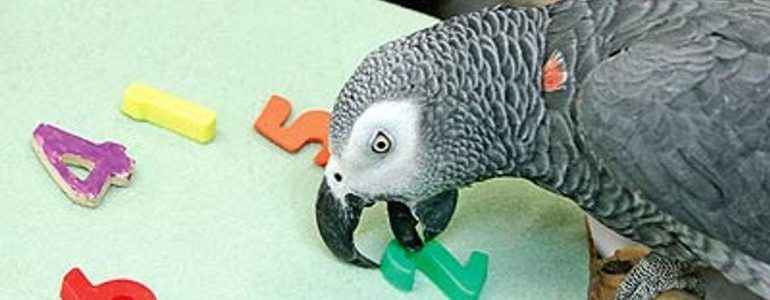
In his book ‘Are We Smart Enough to Know How Smart Animals Are?‘, biologist Frans de Waal shows that animals, like humans, possess cognition—that is, the ability to convert sensory experiences into knowledge about their environment and to anticipate accordingly. Animals simply do this in different ways than humans. Research shows, among other things, that some mammals such as monkeys, but also birds such as parrots and ravens, can imagine things that are not there. There are many stories about animals such as dogs, elephants, and dolphins coming to the aid of each other, other animals, and humans in distress, which is evidence of empathy. We now also know that rats can regret decisions, crows make and use tools, octopuses recognize human faces, and monkeys learn from each other’s mistakes. Humans turn out not to be as unique as we thought.
The triune brain theory perhaps primarily shows how much we, as humans, want to see our own species as unique and superior. The theory implies that animals and other living beings are ‘less developed’ than we are and are therefore, in a certain way, inferior to humans. We can see on a daily basis the consequences of this way of thinking for how we interact with other living beings on our planet.